
How to Layer the Perfect Cottage Bed
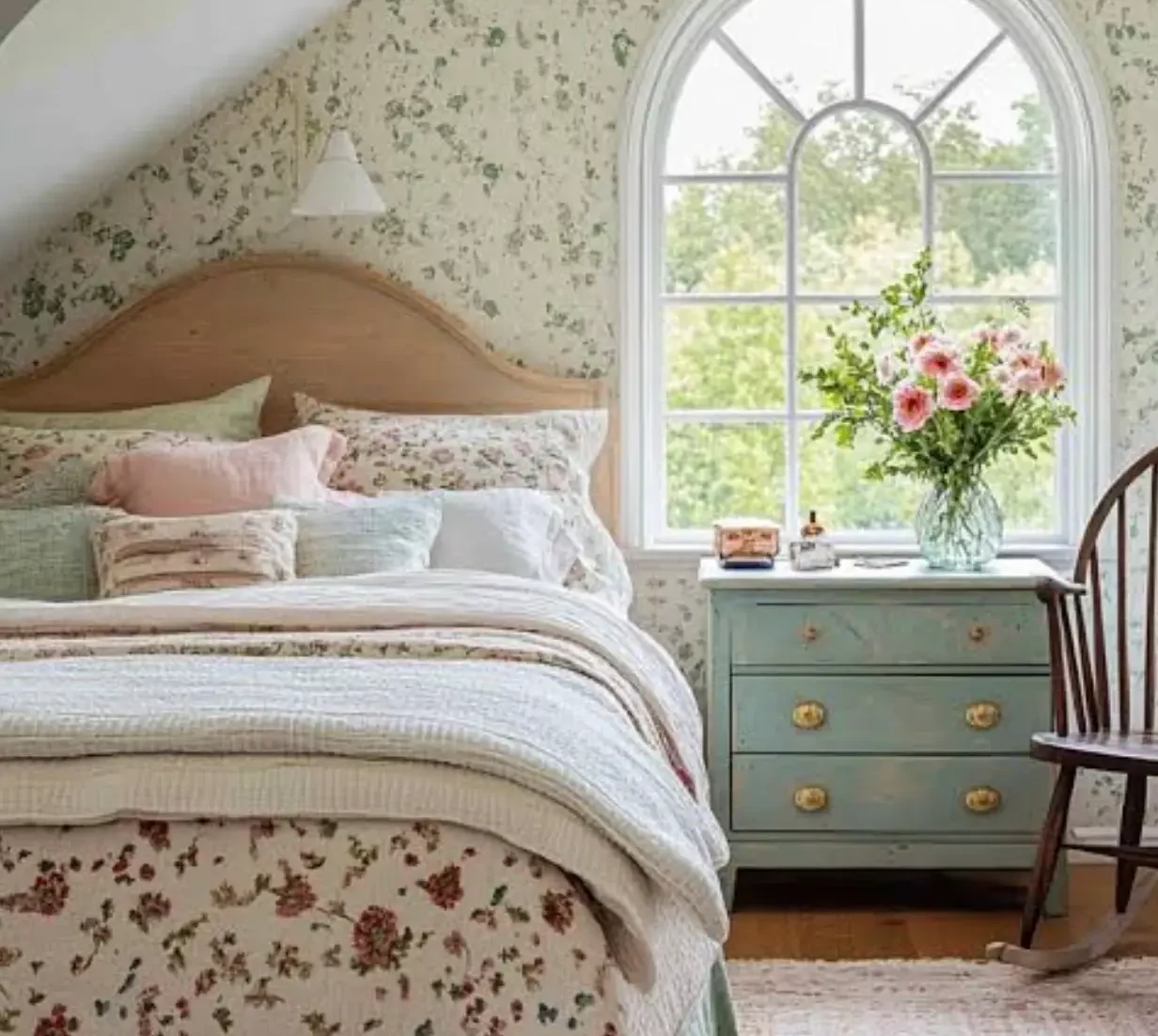
The Foundation: Start With Natural Fibres
Before any layering happens, the base matters. Cotton, linen, and wool breathe, soften with age, and take on that lived-in texture cottagecore is known for. Synthetic blends tend to stay stiff and shiny no matter how you style them, so if you’re investing anywhere, invest in your sheets.
A slightly rumpled linen sheet is doing more visual work than a perfectly pressed one ever could.
The Layers, Bottom to Top
1. Fitted sheet Keep it simple — white, cream, or a soft sprig print. This layer is mostly invisible once everything else is on, so don’t overthink it.
2. Flat sheet or top sheet A contrasting trim, a scalloped edge, or a delicate embroidered border adds a lovely detail that peeks out once the rest of the bed is layered on top.
3. A lightweight blanket or quilt This is where the cottage feeling really starts. A patchwork quilt, a waffle-weave cotton blanket, or a faded floral quilt folded about a third of the way down the bed adds instant texture and colour. Vintage or vintage-style quilts are worth seeking out second-hand — the slight fading and soft wear are exactly the look you want.
4. A heavier duvet or coverlet Go for something with weight and texture — a chunky knit throw doubling as a coverlet, or a classic white cotton duvet with a waffle or matelassé texture. This layer should feel a little oversized, draping generously over the sides rather than sitting neatly within the mattress edges.
5. The top throw Finish with a smaller throw — wool, mohair, or a knitted lap blanket — folded loosely at the foot of the bed or draped over one corner. This is the layer that makes the whole bed look “caught mid-use” rather than freshly made.
Pillows: More Is More, But With a System
Cottage beds tend to have several pillows, but there’s a method to keeping it from looking chaotic:
- Two sleeping pillows in simple white or cream cases, propped upright against the headboard
- Two decorative pillows in a floral, gingham, or ticking-stripe pattern, layered slightly in front
- One smaller accent pillow — a lace-edged square or a needlepoint cushion — placed slightly off-centre at the front
Mismatched pillowcases within the same colour family (a few creams, a soft sage, a faded rose) look far more natural than a matching set straight from a packet.
The Small Details That Sell the Look
- Leave a slight rumple. Smooth the bed with your hands rather than pulling everything taut. A few soft folds and creases are what make it feel real.
- Fold the top layer back. Turning down the duvet or quilt to reveal the sheet underneath adds depth and an inviting, just-about-to-climb-in feeling.
- Add one unexpected texture. A knitted throw against smooth linen, or a lace-trimmed pillow against a chunky wool blanket, gives the eye somewhere interesting to land.
- Keep the palette soft and warm. Cream, sage, dusty rose, warm white, and soft blue work beautifully together and never fight for attention.
A Simple Rule to Remember
If in doubt, layer thin to thick, smooth to textured, and plain to patterned as you move from the mattress up. That progression is what gives a cottage bed its gentle, gathered-over-time feeling — like every layer arrived at a different point in your life and simply belongs there.
